Why Standard ERP Systems Fall Short
Enterprise Resource Planning (ERP) systems are the central nervous system of any large organization, coordinating everything from inventory and human resources to finance and customer relationships. While off-the-shelf solutions are quick to deploy, they often force businesses to modify their unique operational workflows to fit the software, leading to friction and inefficiencies.
1. The Case for Custom ERP Solutions
A custom-built ERP is designed from the ground up to align with your specific business processes. Rather than paying for unused features or struggling with missing modules, a tailored system includes exactly what you need:
- Optimized Workflows: Mirroring your physical operations in software to automate manual, repetitive data entry.
- Modular Scalability: Adding new features, reports, or integrations as your business expands without upgrading expensive subscription tiers.
- Direct Integrations: Connecting seamlessly with your existing tools, proprietary databases, and local warehouse equipment.
2. Database Schema & Data Integrity
At the heart of any successful ERP is a clean, well-indexed database schema. Relational databases like Microsoft SQL Server or PostgreSQL ensure strict data integrity through foreign keys, constraints, and ACID transactions. By designing schemas that eliminate redundancy, businesses can generate real-time financial reporting, track inventory batches accurately, and keep client records secure.
3. Business Intelligence & Automation
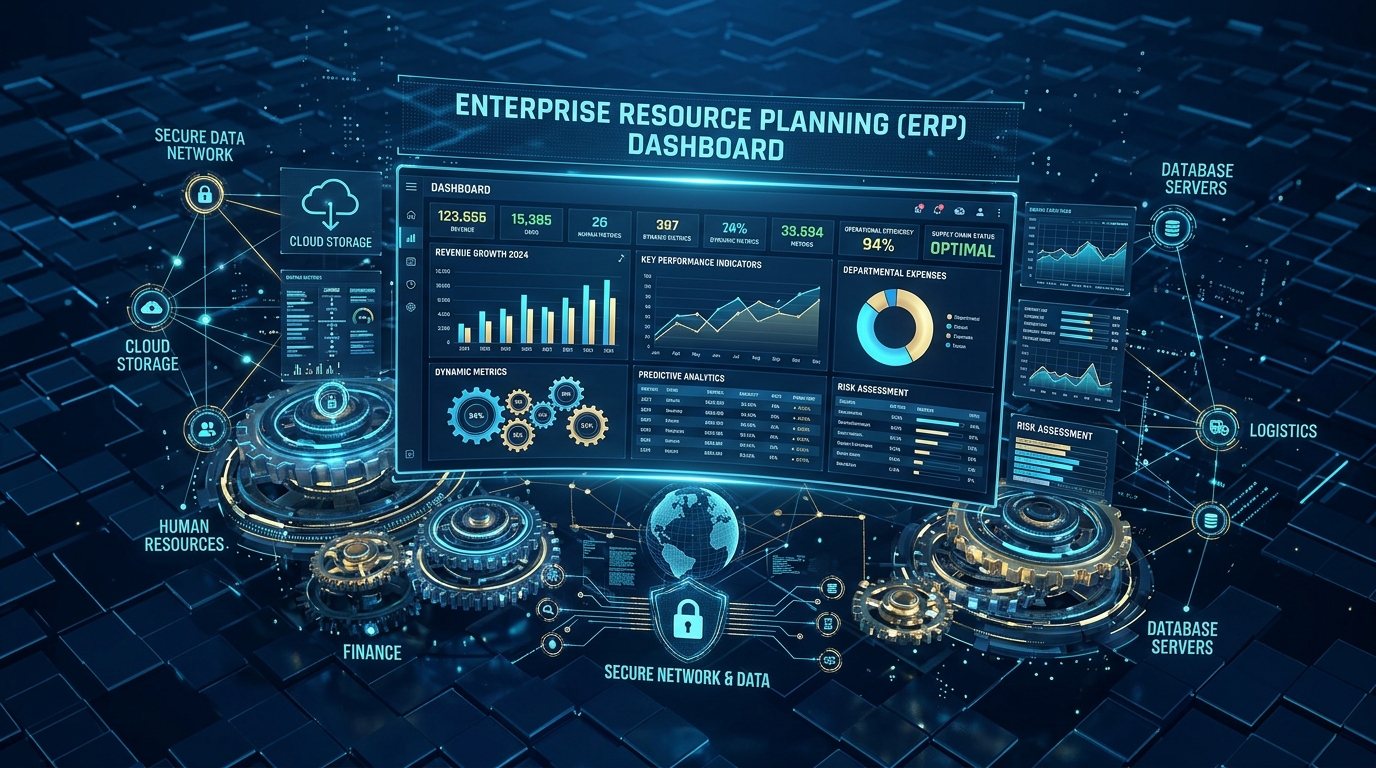
Modern ERPs leverage analytical dashboards to provide real-time visibility into business operations. Decision-makers can view sales trends, monitor supply chain bottlenecks, and track staff utilization at a glance, enabling data-driven decisions that cut overhead costs.
Conclusion
Investing in a custom ERP is an investment in your company’s scalable future. By aligning the software to your workflow and maintaining a rock-solid database, you ensure operational efficiency and a long-term competitive advantage.
Category:
Database & ERP Systems